BreachesIncident report
The Equifax breach: one unpatched server and an expired certificate
Attackers took data on 147 million people through a server missing a two-month-old patch, and a renewed certificate finally exposed them.
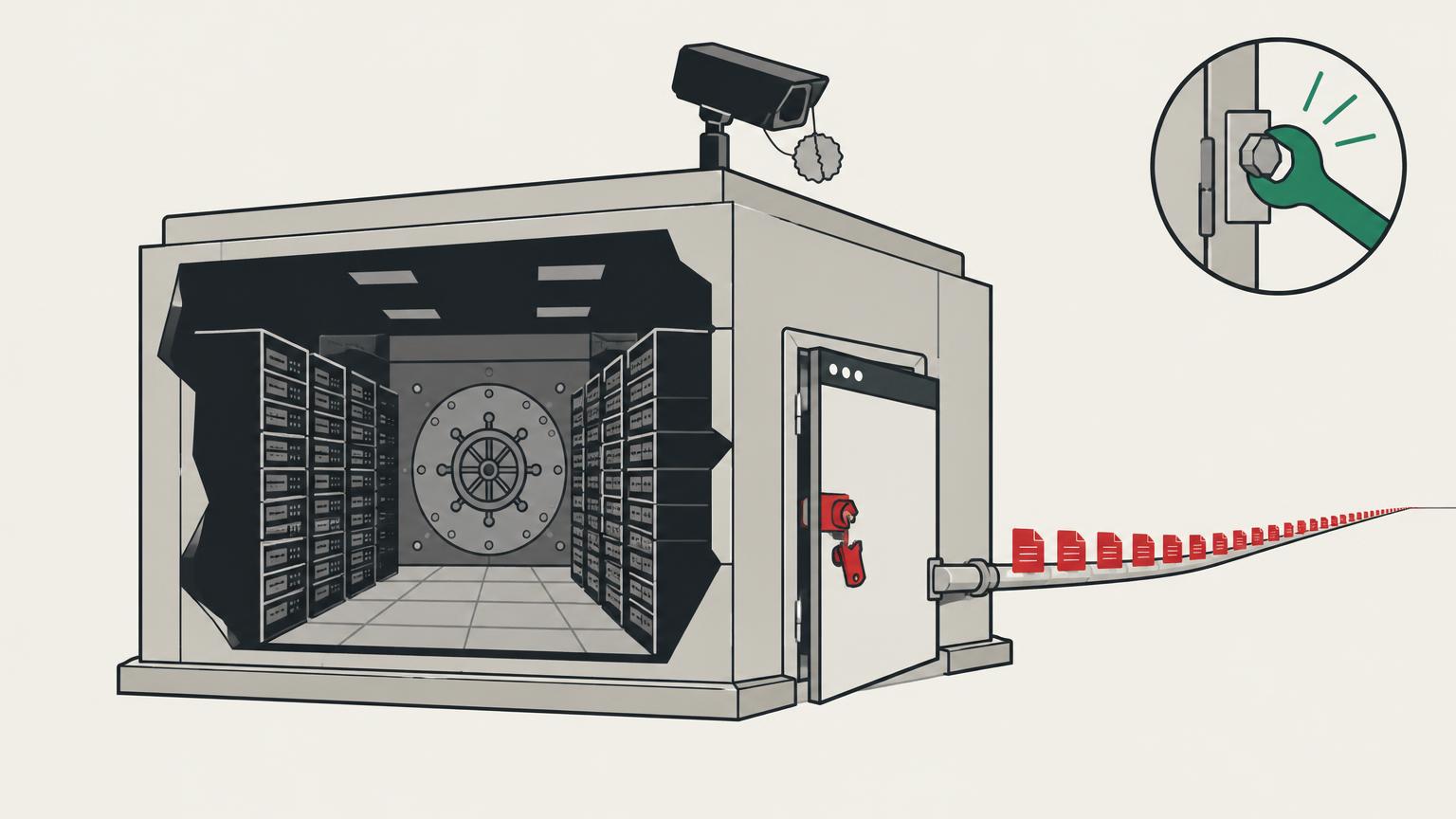
In 2017 attackers spent 76 days inside Equifax, one of the three big US credit bureaus, and left with the names, Social Security numbers and birth dates of about 147 million people. They got in through a web server that was missing a patch published two months earlier, and they went unnoticed partly because a security certificate had expired. Equifax found them by renewing that certificate. The fix that followed covered more than the server: the company rebuilt its security, paid a settlement of up to $700 million, and every American got the right to freeze their credit for free.
When: May to July 2017 Hit: Personal data of about 147 million people Way in: An unpatched Apache Struts flaw (CVE-2017-5638) in an online dispute portal Found by: Equifax's own security team, after renewing an expired certificate Fixed by: Taking the portal offline and patching it, then a company-wide security overhaul Time to fix: 76 days undetected; the patch had been out for two months
What happened
Equifax collects credit histories on hundreds of millions of people and sells reports to lenders. People who want to dispute something on their credit report could do so through an online portal. That portal ran on Apache Struts, a widely used open-source framework for building Java web applications.
In March 2017 the Apache Software Foundation disclosed a serious flaw in Struts and released a fixed version. Equifax's security team circulated an internal alert about it two days later. The dispute portal was never patched, and the scan meant to catch unpatched systems did not find it.
In mid-May attackers found the hole. Over the next eleven weeks they moved from the portal into databases, ran about 9,000 queries according to the US Government Accountability Office, and slowly took data out in small pieces to avoid notice. They took names, Social Security numbers and dates of birth, plus addresses and some driver's licence numbers, and credit card numbers for around 209,000 people. Equifax announced the breach on 7 September 2017. Its final count, published in 2018, was about 147.9 million Americans, plus smaller numbers of people in the UK and Canada.
How it worked
The Struts flaw sat in the way the framework handled one part of an incoming web request. A crafted value in that field could make the server run commands chosen by the sender. Anyone who knew about the flaw could take control of an unpatched Struts server from the internet, and public tools to do so appeared within days of the disclosure.
Getting into the portal was only the start. Investigators found that Equifax's internal network was not divided into separate zones, so the attackers could reach databases unrelated to disputes. They also found usernames and passwords stored in plain text, which let them reach more systems.
The longest-running failure was quieter. Equifax ran a device that inspected encrypted traffic leaving its network, looking for exactly this kind of data theft. It needed a valid certificate to read that traffic. According to the US House Oversight Committee's report, the certificate had expired about 19 months earlier, so the device had been letting encrypted traffic through unchecked. When it was renewed, suspicious traffic showed up straight away.
How it was discovered
There were two discoveries: the flaw, and the intruders.
The Struts flaw was reported to the Apache Struts project by Nike Zheng, a security researcher, and Apache published the fix and its advisory in March 2017. Within days, security companies saw attackers scanning the internet for servers that had not applied it.
The intruders were found by accident of maintenance. Equifax had a device that inspected encrypted traffic leaving its network, but its certificate had expired about 19 months earlier, so it had stopped reading that traffic. On 29 July 2017 staff renewed the certificate. Almost at once, the device flagged suspicious requests to the dispute portal coming from internet addresses linked to China, and the security team blocked them.
The next day they saw more suspicious activity and took the portal offline. On 2 August Equifax brought in the security firm Mandiant to investigate. Its forensic work over the following weeks traced what the attackers had reached, and found the 76 days of access and the data taken.
The timeline
2017-03-07 · Apache publishes a fix for the Struts flaw
The flaw becomes public as CVE-2017-5638, with fixed versions of Struts ready to install. Attacks against unpatched servers begin within days.
2017-03-09 · Equifax circulates the alert, but the portal stays unpatched
The security team tells staff to patch. The people responsible for the dispute portal do not act on it, and a later scan misses the vulnerable server.
2017-05-13 · Attackers get in through the portal
They use the flaw to take control of the server, then begin exploring the internal network and the databases behind it.
2017-07-29 · A renewed certificate reveals the theft
Equifax renews the expired certificate on its traffic-inspection device, spots suspicious traffic from the dispute portal and blocks it.
2017-07-30 · The dispute portal is taken offline
After more suspicious activity, Equifax shuts the portal down, ending the attackers' access, and brings in an outside firm to investigate.
How it was fixed
The immediate fix was simple: take the portal offline, patch Struts and close the paths the attackers had used. The long work came after the announcement. Equifax set up a website for people to check whether they were affected and offered free credit monitoring. Its chief executive, chief information officer and chief security officer left the company.
In July 2019 Equifax agreed a settlement with the Federal Trade Commission, the Consumer Financial Protection Bureau and 50 US states and territories of at least $575 million and up to $700 million. It included a fund for people harmed and a requirement to run a full information security programme with outside assessments.
In February 2020 the US Department of Justice charged four members of China's People's Liberation Army with carrying out the breach.
What changed after
The breach's biggest legacy for ordinary people was a law. In 2018 Congress made credit freezes free nationwide at all three bureaus from September of that year. A freeze stops lenders from pulling your report, which makes it much harder to open credit in your name.
The GAO and House reports made Equifax a standard case study in patch management, network segmentation and certificate management. The expired certificate showed that a security tool nobody checks can fail without anyone noticing, and many companies began tracking certificate expiry automatically.
It also pushed the debate over whether Social Security numbers should still be used to prove identity, given how many have now been exposed.
Lessons that still apply
- Know every system you run. The patch alert went out, but nobody matched it to the portal. An accurate asset inventory is what makes an alert actionable.
- Watch your security tools, not just your systems. An expired certificate quietly switched off a key defence for months. Monitor certificate expiry and alert on any tool that stops seeing traffic.
- Divide the network. One compromised web server should not reach every database. Segmentation limits how far an intruder can go.
- Freeze your credit. For individuals, a free credit freeze at each bureau is still one of the best protections against identity theft.
Sources
- Data Protection: Actions Taken by Equifax and Federal Agencies in Response to the 2017 Breach (GAO-18-559), US Government Accountability Office, August 2018
- The Equifax Data Breach, US House Committee on Oversight and Government Reform, December 2018
- S2-045 security bulletin, Apache Struts, March 2017
- NVD entry for CVE-2017-5638, National Institute of Standards and Technology
- Equifax to Pay $575 Million as Part of Settlement with FTC, CFPB, and States, Federal Trade Commission, 22 July 2019
- Chinese Military Personnel Charged with Computer Fraud, Economic Espionage and Wire Fraud for Hacking into Credit Reporting Agency Equifax, US Department of Justice, 10 February 2020
- Credit Freezes and Fraud Alerts, Federal Trade Commission
The fix → A patch two months late, a certificate 19 months expired, and free credit freezes for every American.
