Supply chainIncident report
SolarWinds: the poisoned update caught by one strange login
Attackers hid a backdoor in SolarWinds Orion while it was built; FireEye traced it from one unexpected phone registration on an employee's account.
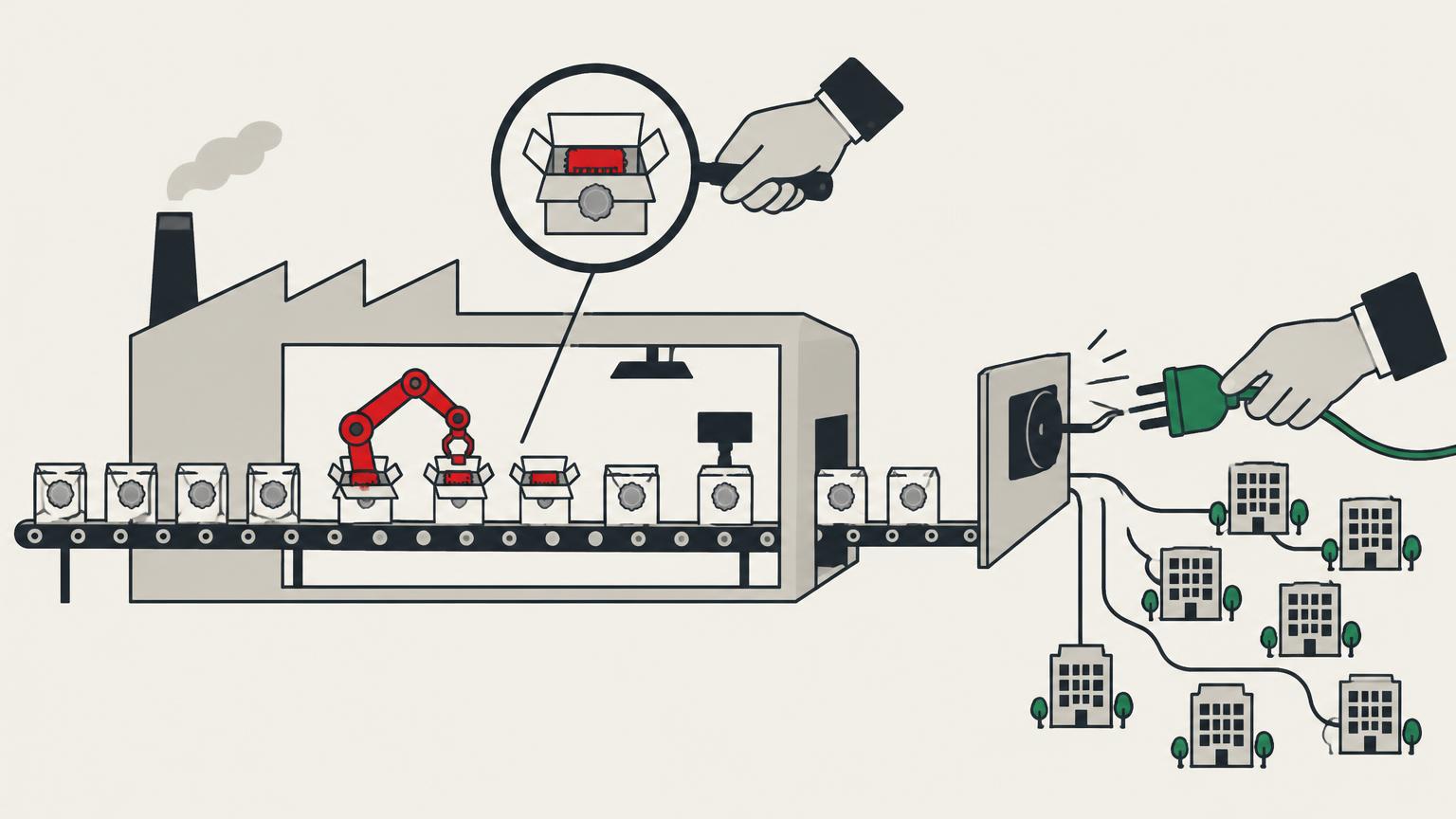
In December 2020 the security company FireEye discovered that the software update meant to keep thousands of networks safe had been carrying a backdoor for nine months. Attackers had slipped hidden code into SolarWinds Orion, a widely used IT monitoring product, while it was being built, so customers installed it themselves through normal updates. The discovery started with one strange login at FireEye. Within days the US government ordered agencies to unplug Orion, and the backdoor was switched off remotely.
When: March to December 2020 Hit: Up to 18,000 customers installed the tainted update; about 100 companies and 9 US agencies were targeted further Way in: A backdoor inserted into SolarWinds Orion while the software was being built Found by: FireEye, investigating a breach of its own network Fixed by: Disconnecting Orion, clean updates, and a kill switch on the backdoor's domain Time to fix: Days from disclosure to emergency measures; months to clean up
What happened
SolarWinds is a US company that makes software for managing IT systems. Its Orion platform watches networks, servers and applications, so it runs with wide access inside the organisations that use it, including large companies and US government agencies.
Attackers got into SolarWinds' own network in 2019. Rather than stealing from SolarWinds, they went after its product. Between March and June 2020, versions of Orion released through SolarWinds' normal update process contained a hidden backdoor, later named SUNBURST. SolarWinds told regulators that fewer than 18,000 customers had installed an affected version.
For most of those customers, the backdoor did little beyond checking in. For a smaller number, the attackers used it as a way in, moved deeper into the networks and read email and documents. The White House later said about 100 private companies and nine federal agencies had been compromised in this way. In April 2021 the US government formally attributed the campaign to Russia's foreign intelligence service, the SVR.
How it worked
The attackers did not change Orion's published source code. Instead they planted a small program, later called SUNSPOT, on the server that compiled Orion into the finished product. During each build it quietly swapped one source file for a version containing the backdoor, then swapped it back. The result was signed with SolarWinds' real certificate and shipped as a genuine update.
Once installed, the backdoor waited up to two weeks before doing anything, and checked that it was not running inside a security researcher's test environment. Then it contacted a server through ordinary-looking web domain lookups, disguising its traffic as Orion's own product data. Only on networks the attackers chose did it go further, letting them install other tools.
Because the update came from a trusted vendor with a valid signature, security tools treated it as normal. The patience and disguise are why it went unnoticed for months.
How it was discovered
FireEye found it by investigating itself. In late 2020 the company's security team noticed that someone had registered a new phone for multi-factor login on an employee's account. They called the employee, who had not done it.
Pulling on that thread, FireEye found attackers inside its network and, on 8 December 2020, announced that tools its red team uses to test clients' defences had been stolen. As it traced how the intruders had got in, its investigators followed the path back to the company's own copy of SolarWinds Orion and found the backdoor in an update SolarWinds had signed.
FireEye told SolarWinds and the US government, and on 13 December published its analysis, so that every Orion customer could check their own systems. Microsoft and other security companies then confirmed the findings and shared ways to detect the backdoor.
The timeline
2019-09 · Attackers get into SolarWinds' network
According to SolarWinds' later investigation, the first test activity begins months before the backdoor ships.
2020-03 · Updates carrying the backdoor begin shipping
Tainted Orion versions go out to customers through normal updates until June.
2020-12-08 · FireEye announces its own breach
The company reports that its red-team tools were stolen, and keeps investigating how the attackers got in.
2020-12-13 · The backdoor is made public and Orion is disconnected
FireEye publishes its findings, SolarWinds issues an advisory, and CISA orders federal agencies to disconnect Orion immediately.
How it was fixed
The first fix was to cut the backdoor off. CISA's Emergency Directive 21-01 told agencies to disconnect or power down affected Orion systems. SolarWinds released updates without the malicious code and told customers to install them.
Days later, FireEye, Microsoft and the domain company GoDaddy took control of the internet domain the backdoor used to call home and turned it into a kill switch: in certain conditions, the backdoor received an answer telling it to stop running. Microsoft also updated its security products to detect and quarantine the tampered Orion files.
The slower fix was for organisations the attackers had gone further into. Removing Orion did not remove the other tools and stolen credentials the attackers had used, so those networks had to be investigated, credentials reset and systems rebuilt. SolarWinds rebuilt its own build process so that each release is built in more than one separate environment and the results compared.
What changed after
SolarWinds made the security of how software is built, not just written, a priority. In May 2021 the US President's Executive Order 14028 on improving the nation's cybersecurity set requirements for software sold to the government, including secure development practices and software bills of materials listing every component.
Industry work followed, such as the SLSA framework for proving how a piece of software was built and reproducible builds, where a release can be rebuilt independently and compared. The attack also changed how defenders think about trusted tools: anything with wide access to a network is a target in itself.
Lessons that still apply
- Follow up odd logins. FireEye's discovery began with one unexpected multi-factor registration. Small anomalies are worth a phone call.
- Protect the build, not only the code. Attackers changed Orion at the moment it was compiled. Build systems need the same protection as production.
- Limit what monitoring tools can reach. Software with broad access, such as IT management tools, should be watched and restricted like any other high-risk system.
- Assume trusted updates can be wrong. Watch what new versions do on your network, not just whether they are signed.
Sources
- Highly Evasive Attacker Leverages SolarWinds Supply Chain to Compromise Multiple Global Victims With SUNBURST Backdoor, FireEye (Mandiant), 13 December 2020
- Emergency Directive 21-01: Mitigate SolarWinds Orion Code Compromise, CISA, 13 December 2020
- Advanced Persistent Threat Compromise of Government Agencies, Critical Infrastructure, and Private Sector Organizations, CISA, December 2020
- Executive Order 14028 on Improving the Nation's Cybersecurity, Federal Register, May 2021
- Fact Sheet: Imposing Costs for Harmful Foreign Activities by the Russian Government, The White House, 15 April 2021
The fix → One unexpected phone on one account unravelled nine months of poisoned updates.
